

LEARN ABOUT DIFFERNT Orthodontic Disorders
Crossbite
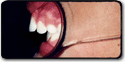
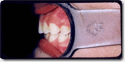
Crossbites can occur in the front and/or the sides of the mouth: One or more upper teeth bite on the inside of the lower teeth. This can occur with a single tooth or multiple teeth. Early correction of crossbite is recommended.
Crossbite should be corrected because it can:
- cause premature wear of the teeth
- cause gum disease including bone loss
- cause asymmetrical development of the jaws
- cause dysfunctional chewing patterns
- make your smile less attractive
|
|
|
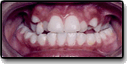
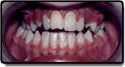
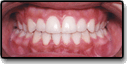
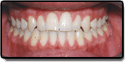
How can a crossbite be orthodontically corrected?
If there is a single-tooth crossbite, the tooth can be moved with braces into the correct position. In some cases, a retainer can be utilized. With multiple teeth in crossbite, the arch needs to be expanded with braces or other intra-oral appliances
Openbite
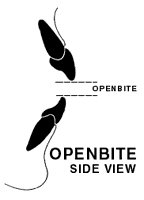
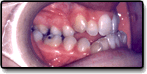
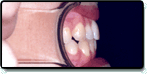
Openbite is an insufficient vertical overlap of the teeth. It is caused by oral habits such as tongue thrust, digit sucking, or when the jaws don’t grow evenly. The timing of treatment is critical to the overall success of the therapy.
How can an open bite be orthodontically corrected?
Openbite can be corrected through growth modification of the jaws using braces, extrusion of the anterior teeth, and in some cases surgical correction of the jaws. Also breaking oral habits, such as digit sucking, will facilitate the correction of an open bite.
|
|
|
Overbite
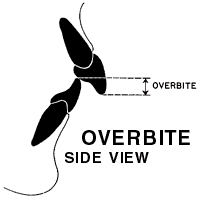
Class II Overbite
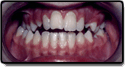
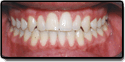
Overbite occurs when the upper front teeth protrude over the lower front teeth. Generally, there is no contact between the upper and lower front teeth. Often you cannot see the lower incisors. Overbite is due to a disproportionate amount of eruption of front teeth or overdevelopment of the bone that supports the teeth and a front-to-back discrepancy in the growth of the upper or lower jaw (Class II Relationship). Overbite is also known as a deep bite.
Overbite should be corrected because it can:
- cause improper functioning of your front teeth
- result in the lower front teeth biting into the gum tissue of the upper palate leading to tissue problems
- unusual wear of the lower front teeth
- cause jaw or joint problems
- make your smile less attractive
How can an overbite be orthodontically corrected?Overbite can be corrected by moving the front teeth up and/or bringing the back teeth together, which will “open” the bite so the teeth are properly aligned and the deep bite is eliminated.Overjet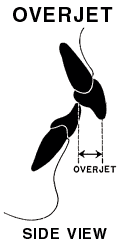 Class II OverjetOverjet is also known as protrusion. In this case, the lower teeth are too far behind the upper front teeth. This can be caused by an improper alignment of the molars (Class II Relationship), a skeletal imbalance of the upper and lower jaw; flared upper incisors, missing lower teeth, or a combination of all of the above. In addition, oral habits such as thumb sucking, finger sucking or tongue thrusting can exacerbate the condition.Overjet should be corrected because it can:
- prevent proper functioning of the front teeth
- lead to premature wear
- make your smile less attractive
How can overjet be orthodontically corrected?Overjet can be corrected through growth modification using a functional appliance and/or elastics to reduce the skeletal imbalance or extraction of teeth.UnderbiteClass III Underbite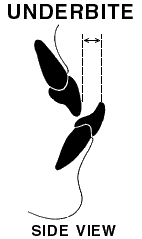 The lower teeth protrude past the front teeth. An underbite is usually caused by undergrowth of the upper jaw, overgrowth of the lower jaw, or a combination of the two (Class III Relationship). Underbite can also be caused by flared upper incisors, missing lower teeth, or a combination of all of the above. Early correction of underbite is recommended.Underbite should be corrected because it can:
- prevent proper functioning of the front teeth or molars which can lead to premature wear of the teeth
- cause chewing or eating problems
- cause jaw or joint problems
- make your smile less attractive
How can an underbite be orthodontically corrected?Underbite can be corrected through growth modification of the jaws, extraction of teeth, and in some cases, surgical correction of the jaws.
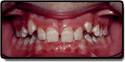 before |
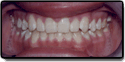 after |
 before |
 after |
 before |
 after |
Are You Looking for Exceptional Pediatric Dentistry Care?
Healthy Teeth Beautiful Smile offers a number of dental treatments that can keep your child's mouth healthy and smile beautiful. Contact us today!